What a truly AI-managed network means in practice.
Business leaders know that artificial intelligence (AI) has the potential to improve performance, reduce cost and strengthen resilience, which is compelling them to invest. As a result, almost every technology vendor - including networking and service providers - now claims to offer AI-enabled solutions.
By Amit Chhabra, Technical Consultant: Network Services at Connect
The challenge is knowing which solutions create measurable business value, and which are simply conventional tools wrapped in AI branding.
The difference materially matters for decision-makers, as a networking solution sold under the AI banner but with no real autonomous capabilities may improve visibility, but it will not necessarily improve service quality, operational efficiency or user experience.
In practice, many networking tools sold with the promise of AI-enabled functionality are little more than reactive dashboards. They detect faults, raise alerts and present data, but leave the business with the same operational burden.
Technical teams still need to manually interpret the issue, decide what to do and take action. This limits the return on AI investment, because the greatest value comes when automation closes the gap between insight and action.
The Litmus test: Detect, decide, do.
To cut through the noise, enterprise buyers need a simple way to test any AI networking claim. The key question is: does the AI detect, decide and do?
A meaningful AI operations layer must do all three. A dashboard that highlights a problem is useful, but it is not the same as an intelligent system that can reason, recommend and act.
Most organisations already have tools that can show when a branch office is experiencing latency. The real business question is whether the system can understand why the problem is happening, what is affected and what should happen next.
A true AI-managed network uses that intelligence to resolve issues proactively through automation. For example, Connect’s AI Ops layer, powered by HPE Juniper Networks, enables the solution to identify the problem, locate it in the environment and determine the appropriate remediation.
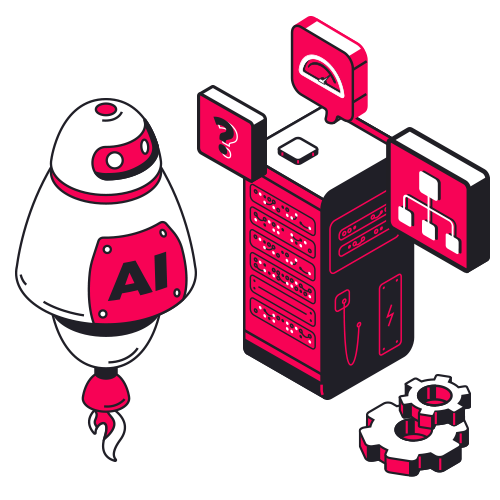
Built on HPE Juniper’s foundational engine, a decade of operational data, deep telemetry, programming and training, the solution goes beyond basic alerts. When permitted, it resolves issues automatically in the background. Where automation is not appropriate, it recommends the next best action or explains why human intervention is required.
Move towards a truly AI-managed network.
Owning the experience from client to cloud.
Many network providers claim AI capability, but their visibility is limited to the SD-WAN, LAN and Wireless overlay. Connect’s advantage is that we can see the full digital experience from client to cloud.
We do not only monitor the on-premise infrastructure. We own the WAN and can see beyond customer infrastructure into the application layer. This end-to-end visibility enables better service quality, faster resolution and the user experience employees expect in the modern workplace.
This broader view helps reduce the time spent proving where the fault sits, and shortens the path to resolution.
When an application slows down, the network is often blamed first. With comprehensive client-to-cloud data and telemetry, the system can quickly determine whether the network is at fault. If so, it can accelerate resolution with an automated fix.
For the business, the real test is whether the solution can identify and fix a problem at 2 am, before employees log on and productivity is affected.
Using HPE Juniper Networks’ Marvis Minis - self-configuring, always-on digital experience software - Connect continuously probes the network. It simulates real user actions, such as authenticating against servers and testing core applications, throughout the day.
This helps ensure vital services are available, reliable and performing. It shifts the operating model from reactive troubleshooting to proactive experience management and fault resolution, helping protect uptime while reducing network trouble tickets by up to 90%.
If the issue sits outside the network, IT teams still gain clarity on what the problem is, where it is located and what action is required.
Optimisation for the modern workspace.
This proactive approach is especially important for wireless networks. Employees now expect seamless “coffee shop” connectivity wherever they work in the office, but many legacy wireless environments still rely on fixed configurations.
These environments may be tuned for radio-frequency interference, but they often cannot respond to changing usage patterns or the bandwidth demands of cloud applications during the day.
True AI-managed networking continuously monitors performance, identifies localised capacity constraints and dynamically adjusts traffic and coverage before users experience dropped calls, video lag or poor application performance.
Autonomy with control.
For many organisations, the hesitation around autonomous networks is not about capability. It is about control, accountability and risk.
Connect addresses this by working with customers to define clear guardrails and operating frameworks, because migrating to an AI-managed network does not mean handing over full control overnight.
With phased access, organisations can define what the AI may act on automatically and where human approval must remain in place.
Teams typically start with the low-hanging fruit first, allowing the AI to tackle low-risk, repetitive tasks, such as fixing a misconfigured port or resolving a routine IP conflict. This gives technical staff more capacity to focus on higher-value work.
When operating in autonomous mode, the system logs every action taken and records the reasoning behind it, creating a clear audit trail.
Achieve better business outcomes.
Whether the priority is supporting a highly mobile wireless LAN, modernising the WAN or sweating existing infrastructure, the move to a true AI-managed network can be practical and incremental.
AI should not give your organisation another dashboard to monitor. It should improve business outcomes. By choosing a solution that can detect, decide and do, organisations can reallocate technical capacity, reduce downtime and deliver the reliable user experiences modern businesses depend on.
Frequently asked questions.
What is the difference between an AI-enabled network and a true AI-managed network?
Many networking solutions marketed as "AI-enabled" can detect faults, generate alerts and provide dashboards, but they still rely on IT teams to investigate issues and decide on the next steps. A true AI-managed network goes further by detecting problems, determining their cause and either automatically resolving them or recommending the most appropriate action. This enables organisations to reduce manual intervention, improve operational efficiency and deliver a more reliable user experience.
How can an AI-managed network improve business operations?
An AI-managed network helps improve business outcomes by proactively identifying and resolving network issues before they affect users. Rather than waiting for employees to report problems, it continuously monitors network performance, tests critical services and automates routine remediation where appropriate. This can reduce downtime, improve application performance, free IT teams to focus on strategic initiatives and enhance the digital experience for employees across the organisation.
About'Connect.
Connect is a global customer experience specialist, systems integrator and digital transformation partner with industry-leading, technology-enabled capabilities. Founded in 1990, we’ve evolved alongside every major industry shift; from on-premise to cloud, voice to omni-channel, and now AI-enabled experience. Built on this extensive market experience, our approach is focused on delivering outcomes-based solutions that accelerate value, informed by what it takes to operate, scale, and continuously improve CX in live environments. We deliver end to end, from the network that carries customer contact, through interactions in the contact centre, to the integrated back-end systems that support them. This end-to-end accountability creates a unified view of the customer and operations, enabling consistent, reliable outcomes at scale.
Connect with us Connect UK, Connect South Africa, Connect India, Connect USA.
Find out how we can help your business communicate better.
To discuss your communications challenges and requirements, get in touch with us today.
Connect with us now.
New web: Contact Us
"*" indicates required fields